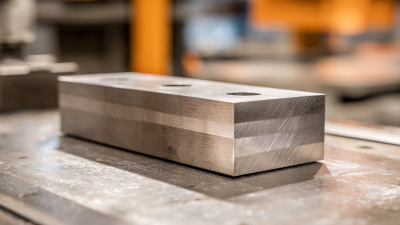
Vacuum Chuck Ceramic might sound like pretty technical stuff, but basically, it’s a super precise tool used in industries like semiconductor manufacturing, optics, solar tech, and other advanced fields. It holds onto a wafer or thin substrate using controlled negative pressure — think of it as a smart grip. Unlike regular metal chucks, this ceramic one is special because it balances strength, heat stability, electrical insulation, and even has tiny pores built in. Even though the surface looks smooth to the naked eye, those microscopic pores are what allow air to pass through just enough to keep the workpiece securely in place.
Dr. Masahiro Okada, who’s an expert in vacuum fixtures at Ferrotec, sums it up nicely: “A reliable vacuum chuck turns controlled airflow into stable, repeatable contact.” It’s a simple idea, really. The vacuum pump lowers pressure underneath the substrate, and then atmospheric pressure pushes the wafer against the chuck’s surface — kind of like how you’d press your hand on a table. The way the sealing grooves, porous zones, and surface flatness are designed all impact how evenly that force spreads out. And yeah, even tiny leaks can make a difference.
Honestly, those little leaks matter more than you might think.
In this guide, I’ll walk you through what Vacuum Chuck Ceramic actually is, how it works, and how its design decisions can influence your production quality. We’ll dig into details like pore structure, surface finish, temperature effects, and how to keep everything clean and well-maintained. Keep in mind, though, performance isn’t always perfect — dust could clog those tiny passages, uneven wafer edges might reduce how well it grips, and too much suction could even damage fragile materials. Small stuff like this often gets overlooked during initial testing.
A reliable system isn’t just about having a powerful pump. Engineers need to carefully match the ceramic material, its permeability, shape, vacuum levels, and process conditions. While manufacturers like Kyocera and CoorsTek provide good info for choosing materials, you really need to test things yourself to see how they perform. And honestly, the key isn’t just making the vacuum stronger — it’s about making sure it’s controlled, even, and repeatable for consistent contact.
Hope that gives you a clearer picture—this stuff is complex but super fascinating once you get into the details.
Vacuum chuck ceramic is a porous, precision-machined ceramic plate that holds wafers or thin parts without mechanical clamps. Its tiny interconnected pores distribute negative pressure across the working surface. When a vacuum pump removes air, atmospheric pressure pushes the workpiece firmly against the chuck.
Alumina is widely used because it offers high hardness, chemical resistance, and stable insulation. Aluminum nitride can provide better thermal conductivity, which helps manage heat during grinding or inspection. The surface may look smooth, but its performance depends on pore size, permeability, flatness, and sealing quality. A small scratch can create leakage. That detail is easy to underestimate.
SEMI reported global semiconductor manufacturing equipment sales of about 114 billion US dollars in 2024. This investment reflects tighter demands on wafer handling and process stability. A ceramic chuck must therefore maintain uniform suction across a large surface while limiting particle generation. In practice, technicians check vacuum decay, surface flatness, and temperature response before production use. ISO 14644 cleanroom principles also make low-particle materials important. Still, ceramic is not perfect. It can chip under impact, and blocked pores may reduce holding force. Designers must balance grip, cleanliness, thermal behavior, and repairability for each process.
Vacuum chuck ceramic is a rigid workholding surface used to secure thin, delicate, or flat components. It works by creating lower air pressure beneath the workpiece. Atmospheric pressure then presses the part against the chuck. Ceramic is useful because it resists heat, wear, and chemical exposure. It also keeps its shape during repeated processing.
Construction begins with a dense ceramic body, commonly based on alumina or another engineered ceramic. The body may contain a controlled network of microscopic pores. Some designs use drilled channels and sealed grooves instead. These pathways distribute vacuum across the working face. A porous layer is then finished to create a smooth, level surface. The underside usually includes a vacuum port, sealing area, and mounting features. Careful grinding controls flatness and contact accuracy. Small flaws still matter. A blocked pore or uneven edge can reduce holding force noticeably. Designers must balance porosity, strength, airflow, and cleanability. More airflow is not always better.
Tips: Inspect the face under angled light before use. Clean it with a compatible, lint-free method. Avoid sudden impacts, even when the ceramic looks solid. Check vacuum stability with a test part first. Remember that surface contamination can create false confidence. A chuck may hold during setup, then lose grip during processing.
A vacuum chuck ceramic is a porous ceramic plate used to hold flat workpieces during machining or inspection. Its microscopic pores form many small air passages across the surface. A connected vacuum system removes air beneath the workpiece. Atmospheric pressure then pushes the workpiece against the ceramic surface. That pressure creates the holding force. No mechanical clamps are needed.
The process starts when an operator places a clean wafer, glass panel, or metal sheet on the chuck. The contact surface must cover enough vacuum area to seal the pores. Good sealing matters. If dust, moisture, or scratches create a gap, air enters the system and reduces grip. Technicians often check vacuum readings before processing. They also inspect the ceramic surface for blocked pores or uneven wear. A stable reading does not always prove perfect contact.
In real production, the holding process is not flawless. Thin workpieces may bend slightly, while excessive vacuum can cause unwanted deformation. The ceramic’s porosity, surface flatness, and pore size must match the application. Engineers should also consider heat, because temperature changes can affect both the workpiece and the chuck. Regular cleaning helps preserve airflow, but aggressive cleaning may damage the porous surface. Small leaks deserve attention. Ignoring them can lead to movement, scratches, or inaccurate machining.
Vacuum chuck ceramics are engineered plates that hold wafers through controlled suction. Their materials must combine electrical insulation, dimensional stability, and low particle generation. Alumina remains common because it is economical and chemically resistant. High-purity grades often reach 99.5% alumina or higher. Aluminum nitride offers stronger thermal conductivity, typically around 170–200 W/m·K, according to property data in the ASM Handbook. Silicon carbide can provide excellent stiffness and wear resistance, although it may require more careful finishing.
Manufacturing begins with fine ceramic powder, binders, and controlled additives. Engineers may use dry pressing, isostatic pressing, or injection molding. Isostatic pressing helps reduce density variation across large chuck bodies. After forming, the green body is machined, debound, and sintered at high temperature. Precision grinding then creates the flat working surface. Small vacuum channels and holes are commonly produced by green machining, laser drilling, or post-sinter machining. Metallization may be added when electrodes or electrostatic functions are required.
The details matter.
A 2023 semiconductor equipment report from SEMI recorded global sales of about 106.3 billion dollars. That figure is not chuck-specific, but it shows the scale of precision manufacturing demand. The 2023 International Roadmap for Devices and Systems also stresses tighter control of contamination, flatness, and thermal behavior. In practice, a few micrometers of warpage can affect wafer contact. Ceramic selection is not always obvious. A harder material may improve wear life, yet increase machining cost and introduce finishing risks. Manufacturers must validate pore size, dielectric strength, surface roughness, and thermal cycling performance for the actual process.
| Category | Item | Typical Information | Function or Manufacturing Significance |
|---|---|---|---|
| Definition | Vacuum chuck ceramic | A porous or engineered ceramic vacuum fixture used to hold a workpiece through pressure difference. | Provides support, controlled air flow, chemical resistance, and stable positioning during precision processing. |
| Working Principle | Pressure differential | A vacuum pump lowers the pressure beneath or within the chuck while atmospheric pressure acts on the exposed workpiece surface. | The resulting holding force is approximately proportional to effective sealed area multiplied by pressure differential. |
| Working Principle | Air-flow path | Vacuum travels through interconnected pores, grooves, channels, or drilled passages. | The flow path must be sufficiently open to evacuate air but controlled enough to maintain uniform clamping. |
| Main Material | Alumina ceramic | Typically based on high-purity aluminum oxide; common grades range from approximately 90% to above 99% alumina. | Offers high hardness, electrical insulation, wear resistance, and good dimensional stability. |
| Alternative Material | Porous silicon carbide | A ceramic containing interconnected pores, generally selected where high thermal conductivity and stiffness are important. | Useful for thermal-management applications, although its manufacturing and finishing requirements can be more demanding. |
| Alternative Material | Porous silicon nitride | A technically advanced ceramic with low density, high thermal-shock resistance, and strong mechanical performance. | Chosen for specialized applications where thermal shock and mechanical reliability are priorities. |
| Porosity | Open porosity | Pores are connected to form air-flow paths; the usable percentage depends on the ceramic formulation and design. | Controls air permeability, evacuation time, holding uniformity, and resistance to clogging. |
| Porosity | Pore size | Usually engineered from fine to relatively coarse interconnected pores according to the required air-flow rate and surface finish. | Smaller pores improve surface support and reduce marking, while larger pores can increase permeability. |
| Material Property | Hardness | Dense alumina commonly has a Vickers hardness of roughly 1,200–2,000 HV, depending on grade and test method. | Supports resistance to scratching, abrasion, and repeated contact with hard workpieces. |
| Material Property | Thermal expansion | Alumina typically has a coefficient of thermal expansion of about 7–9 × 10⁻⁶/K near room temperature. | Relatively low expansion helps maintain positioning and flatness during moderate temperature changes. |
| Material Property | Electrical behavior | Alumina is normally electrically insulating, while its resistivity depends on purity, temperature, porosity, and surface contamination. | Useful where electrical isolation is required; conductive or dissipative ceramic formulations may be selected for static-control needs. |
| Manufacturing Method | Powder preparation | Ceramic powder is classified, blended with additives, and prepared for forming. | Controls purity, particle-size distribution, packing behavior, shrinkage, and final pore structure. |
| Manufacturing Method | Dry pressing | Granulated powder is compacted in a mold under pressure to create a near-net-shape blank. | Suitable for flat, round, and relatively simple geometries with repeatable dimensions. |
| Manufacturing Method | Isostatic pressing | Pressure is applied more uniformly around a flexible mold, often producing a billet or larger preform. | Reduces directional density variation and is useful for larger or thicker ceramic components. |
| Manufacturing Method | Slip casting or extrusion | A ceramic slurry may be cast into a mold, or a plasticized ceramic body may be pushed through a die. | Useful for complex profiles, elongated shapes, and customized internal or external geometries. |
| Manufacturing Method | Binder removal | Organic binders and forming additives are removed gradually before high-temperature firing. | Careful heating prevents cracking, blistering, distortion, and unwanted changes in pore connectivity. |
| Manufacturing Method | Sintering | The shaped body is heated below its melting point so particles bond and the component gains strength. | The firing schedule determines shrinkage, strength, dimensional accuracy, and residual porosity. |
| Manufacturing Method | Precision grinding and lapping | Diamond abrasives are commonly used to finish ceramic surfaces after firing. | Produces the required flatness, parallelism, thickness, edge geometry, and surface roughness. |
| Design Feature | Vacuum grooves and zones | Some chucks use machined grooves, isolated vacuum zones, or a combination of channels and porous surfaces. | Improves flow distribution and allows clamping force to be adapted to different workpiece sizes. |
| Applications | Precision machining and polishing | Used for holding wafers, optical parts, thin substrates, glass, ceramics, and other flat components. | Minimizes mechanical distortion and keeps the workpiece stable during grinding, lapping, polishing, or inspection. |
| Advantages | Low particle generation | Ceramic surfaces do not shed fibers or elastomer fragments under normal use in the same way as some soft fixtures. | Supports cleaner processing, provided the chuck is properly cleaned and the ceramic is not damaged. |
| Limitations | Brittleness and impact sensitivity | Ceramics have high compressive strength but relatively low tolerance for impact, tensile stress, and sudden handling shocks. | Careful packaging, mounting, edge design, and thermal management are required to avoid chipping or fracture. |
| Maintenance | Cleaning and pore protection | Particles, slurry, oils, and process residues can block pores or grooves and reduce vacuum performance. | Regular cleaning with a process-compatible method and inspection for chips helps preserve holding uniformity. |
Vacuum chuck ceramic is a rigid ceramic fixture that holds parts through controlled suction. Its surface contains fine pores or engineered vacuum channels. During operation, a pump removes air beneath the workpiece. Atmospheric pressure then presses the part against the chuck. The holding force remains stable when the surface is flat and properly sealed.
This chuck is common in semiconductor manufacturing, especially during wafer grinding, polishing, cleaning, and inspection. It also supports glass sheets, optical components, ceramic substrates, and thin electronic panels. These materials often need gentle, even support.
Ceramic resists wear, many chemicals, and temperature changes better than several ordinary fixture materials. Its low particle generation also helps protect sensitive surfaces. However, performance depends on pore size, surface finish, vacuum level, and the part’s cleanliness. A poorly matched chuck can create uneven pressure or leave marks.
Tips: Check flatness before precision work. Keep vacuum paths clean and dry. Use a lint-free cloth, not excessive force. Measure holding force during routine maintenance. In practice, the perfect setup is rare. Small leaks can remain unnoticed. Operators should inspect seals, listen for unusual pump sounds, and confirm release timing. Thermal shock also deserves attention, because sudden temperature changes may cause cracks or dimensional drift. Test the chuck with a noncritical workpiece first. That simple step can prevent expensive mistakes.
Vacuum chuck ceramic is a porous, rigid workholding surface used to secure thin parts during machining, inspection, or coating. Its microscopic pores connect to internal vacuum channels. When air is removed, pressure holds the workpiece against the ceramic face. The clamping force spreads across the contact area instead of concentrating at a few mechanical points.
Its main benefit is stability. A flat ceramic surface can support delicate sheets, wafers, glass panels, and precision components without leaving clamp marks. It also resists wear, corrosion, and many process chemicals. Ceramic produces little particle contamination when properly maintained. It stays flat. During temperature-sensitive work, its low thermal expansion can help preserve alignment. In practice, however, performance depends on pore design, surface flatness, gasket condition, and the workpiece’s sealing ability.
The limitations deserve equal attention. Porous ceramic can chip or crack after impact, especially around edges and mounting holes. Dust, oil, or slurry may block the pores and reduce holding force. Cleaning requires care because aggressive methods can change the surface or damage seals. Vacuum leakage may also appear when a part is warped, perforated, or too small for the active area. The material and precision grinding can increase initial cost. It is easy to overstate its advantages. A ceramic chuck is not automatically better for every process; engineers must check load, temperature, surface finish, and maintenance conditions before selecting it.
Vacuum chuck ceramic is a porous ceramic fixture that secures a workpiece through controlled negative pressure. Its tiny, connected pores distribute suction across the contact area. When the vacuum valve opens, air moves through the ceramic, creating a pressure difference that holds the part firmly. The chuck must remain flat and permeable. Small surface defects can reduce stability.
Selection should match the material, shape, weight, and process temperature of the workpiece. Check pore size, porosity, flatness, thickness, and allowable vacuum pressure. Fine pores support small, delicate parts, while larger pores may suit rougher surfaces. Chemical compatibility matters when coolants or cleaning agents are used. Thermal expansion also deserves attention during heating cycles. A perfect specification on paper may still fail in production. Test holding force with the actual workpiece before regular use.
Maintenance is simple, but often neglected. Remove dust with filtered, dry air, and use a soft, non-abrasive cloth. Avoid sharp tools that can close or damage surface pores. Inspect the vacuum line, seals, and filter for leaks or blockage. If suction weakens, check contamination before increasing pressure. Excessive vacuum can deform thin parts. Tips: Keep the contact surface dry. Record flatness checks. Replace damaged seals promptly. Allow the ceramic to cool gradually. A spotless chuck is helpful, but it is not always enough; uneven mounting or a warped workpiece can still cause movement.
It is widely used for wafer grinding, polishing, cleaning, and inspection. It also supports glass sheets, optical parts, ceramic substrates, and thin electronic panels.
A pump removes air beneath the part through pores or internal vacuum channels. Atmospheric pressure then presses the workpiece against the ceramic surface.
It distributes holding force across the contact area. This reduces clamp marks on delicate sheets and precision components. It also resists wear, chemicals, and temperature changes.
A flat surface helps create even pressure and stable suction. Poor flatness can cause weak holding or uneven support. It stays flat.
Dust, oil, slurry, and blocked pores can weaken suction. Warped, perforated, or undersized parts may also leak air. Small leaks matter.
Keep vacuum paths clean and dry. Use a lint-free cloth without excessive force. Inspect seals, check holding force, and listen for unusual pump sounds.
Sudden temperature changes may cause cracks or dimensional drift. Allow temperature transitions to occur carefully, especially during precision work.
Porous ceramic may chip or crack after impact, especially near edges and mounting holes. Initial costs can also be higher because precision grinding is required.
They should check pore design, surface finish, flatness, vacuum level, load, temperature, and the part’s sealing ability. A ceramic chuck is not automatically ideal for every process.
Test the chuck with a noncritical workpiece first. Confirm holding force, release timing, and surface condition. The perfect setup is rare.
Vacuum Chuck Ceramic is a porous ceramic workholding surface designed to secure thin, delicate, or irregularly shaped components through controlled vacuum pressure. Its carefully distributed pores allow air to pass through the material while creating a stable holding force across the workpiece. The chuck is commonly built from engineered ceramic powders that are shaped, sintered, and finished to achieve the required porosity, flatness, strength, and dimensional accuracy. During operation, a vacuum source removes air from beneath the component, producing pressure that holds it firmly without mechanical clamps or significant deformation.
This technology is widely used in semiconductor processing, precision machining, optical component production, glass handling, and other applications requiring clean and uniform support. Its main advantages include excellent flatness, chemical resistance, temperature stability, low particle generation, and even force distribution. However, ceramic surfaces can be brittle, and blocked pores or improper vacuum control may reduce performance. Selection should consider workpiece size, material, surface condition, vacuum level, porosity, and operating temperature. Regular cleaning, careful handling, leak inspection, and proper storage help maintain reliable performance and extend service life.